
People often ask me: “Michael, what are your favorite Scottish distilleries? You know so much about Scotch whisky, I really want to pick your brain and find out which distilleries you keep coming back to!”
Just kidding.
No one has ever asked me that, although I have often wished someone would ask me about my favorite distilleries. Well, I’m not waiting any longer to be asked–I’m just going to tell you!
While I’m at it, I’m going to discuss “near misses” and “up-and-comers”. The “near misses” are distilleries that I’m pretty familiar with and generally really like; at least some of them have been in my top 10, and those that haven’t could easily slip in if I come across additional expressions that I like well enough. The “up-and-comers” are either new distilleries whose early release(s) have strongly impressed me, or more established ones that have made enough exciting changes to their offerings that I could see them moving toward my top 10.
For good measure, I’m also going to spend some time on distilleries that get other people fired up–the distilleries that are currently setting the enthusiast crowd abuzz, and those that are admired by the more general drinking population–and explain why they’re not in (or in some cases, anywhere near) my personal top 10. But first…
In no particular order:
My (current) ten favorite Scottish distilleries
Bunnahabhain
In terms of Islay distilleries, Bunnahabhain still flies a little under the radar among casual Scotch drinkers, although it is increasingly highly regarded among enthusiasts. Perhaps it’s because the name (pronounced “Bun-na-HAH-ven”) appears difficult to pronounce, or perhaps it’s the fact that the standard Bunnahabhain range is unpeated whisky from an island most famous for eye-wateringly peaty whiskies. In any event, they produce lovely malts:I’ve never had a bad whisky from Bunnahabhain, I’ve only had good whisky and better whisky.
Glenfarclas
The story goes that a rival distiller once proclaimed “Of all the whiskies, malt is king, and of all the malts, Glenfarclas reigns supreme!” Hyperbole? Perhaps, but they do produce some quality malt at Glenfarclas. A big, weighty, rich Speysider that holds up against decades of maturation in sherry wood, Glenfarclas is the best distillery on Speyside (and arguably in the entire Highlands, at least on the mainland) and in terms of consistency, produces the best sherried malts.
Oh, and they’re also the longest standing family-owned single distillery in all of Scotland.
Glenfarclas gets knocked on two counts: 1) people complain about radical swings in quality and 2) the enthusiast community bitches that they haven’t kept up with the times on presentation.
On the first count, I don’t have the bandwidth to taste everything that comes down the pike, but personally, I’ve never had a bad Glenfarclas, and every Glenfarclas I’ve ever tasted that’s over 10 years old has been anywhere from delicious to exceptional.
On the second, the enthusiast community has a point: Glenfarclas really should get with the times and do integrity presentation across the board. But as nice as integrity presentation is, it’s not the end all and be all. I’d rather not drink chillfiltered whisky, but if it tastes like Glenfarclas, I can live with it.
Ardbeg
I got dragged kicking and screaming into the cult of Ardbeg. If Macallan is the obnoxious preppy, endlessly humble-bragging about how expensive his wardrobe, his watch, his car, and his prep school are, Ardbeg is the obnoxious (and slightly basic) hipster who dresses like he rolled out of a Wes Anderson flic, regaling you about not-all-that-obscure bands he thinks you’ve never heard of, telling you about the summer he spent in “Barthelona” (spelling intentional) and name-checking mid-20th century French philosophers. It’s all a little grating, and a touch precious.
But you know what? That little Lyotard-quoting motherfucker who won’t shut up about Neutral Milk Hotel makes some insanely good whisky. Bottling after bottling delivers heavily peated excellence, and it doesn’t hurt that they were early adopters of the trend toward integrity presentations, one that their Kildalton coast brethren have yet to adopt consistently (seriously, come on guys, it’s 2025!)
Is some of the branding starting to land on the wrong side of twee these days? Sure. Is it obnoxious that they keep cranking up the price on no-age statement releases built largely around gimmicky marketing? Yup.
But the core range is still excellent, and reasonably priced by the inflated standards of single malt Scotch, and all those irritatingly overpriced special releases may not exactly be a good value purchase, but they’re mostly still excellent whiskies.
Inchgower
Inch what again? Inchgower is a distillery that most whisky drinkers don’t even know exists, and I’ve never seen an enthusiast raving about it. I wouldn’t go so far as to rave about it…but it’s good stuff, and it manages to wear many different masks without ever completely ceasing to be itself. The standard 14 year old from the Flora and Fauna range is a grassy, slightly saline whisky aged in casks that have obviously been around the block a few times. More assertive maturation can lead to attractive caramel and coffee notes (as in a nice 21 year old essay in the Old Malt Cask range), or it can lead to a bizarre whisky with notes of motor oil (the sherry-shellacked 16 year old that came out of Diageo’s Manager’s Choice range), but a recognizable saline edge is always in the mix.
Kilchoman
Until quite recently, Kilchoman was Islay’s newest distillery, having been built in 2005 (prior to that it had been Bunnahabhain and Bruichladdich, which both date to 1881). Ardnahoe, which came online in 2018, holds the mantle for now (unless you count the revenant Port Ellen), although with several new distilleries on the way, that won’t last.
I got my hands on an early version of the flagship Machir Bay, and although I thought it was nice, assertively peaty young whisky, it didn’t knock my socks off. I’ve subsequently had several Kilchomans that introduce a bit of sherry into the mix, and they’re some of the absolute best whiskies I’ve tasted that mix sherry and peat.
Pulteney
A sentimental favorite. Old Pulteney was the very first single malt I ever tasted, so it started me on this journey. I’ve had great whisky from Old Pulteney (the old 21 and 17 year olds were both spectacular malts), very good whisky from Old Pulteney (the old 12 year, at 43% abv, was a gem, and also a steal of a deal), rather lackluster whisky from Old Pulteney (Huddart), and even borderline bad whisky from Old Pulteney (a release from Dutch indie bottler van Wees).
Unless it’s Huddarts all the way down from now on, I’ll probably always have a soft spot for Pulteney, and a place for it in my top 10.
Benriach
Billy Walker brought this obscure and unloved Speysider out of the shadows when he led the group that purchased it from Pernod-Ricard in the early 2000s. Following his acquisition of the distillery, a raft of bottlings, some using previously unheralded peated make, and many using various interesting maturation regimens, were released.
The packaging was colorful, with appealing graphic design, the whisky was excellent, and all of it was very reasonably priced. It made collecting Benriach affordable and fun, both for livening up your whisky shelf and for making your taste buds happy. I ended up with a lot of bottles of Benriach, and I really enjoyed most of them.
Walker’s group sold to Brown-Forman a while back, and in terms of boosting the brand’s visibility and distribution, that was probably a good thing. The new ownership has gone in the opposite direction to Walker with the packaging, favoring a rather elegant, minimalist design in shades of white and grey; I’ve yet to actually taste any of the whisky produced by the new regime, so we’ll just have to see if it holds up to the bottlings of yore.
Ardnamurchan
A darling among enthusiasts, especially Roy Duff (better known as Aquavitae) and his merry little band of acolytes. It’s a new distillery, but everything I’ve had from there has been cracking. They’re also pioneers of a degree of transparency about their whiskies that goes above and beyond integrity presentation. Yes, all their whiskies are integrity presentation, but they also have a QR code on every bottle. Scan it and you’ll get a thoroughgoing history of the spirit in the bottle–the barley used, the fermentation regimen, the individual casks vatted to produce the release, and even which distillery employees contributed to bottling. Basically, they walk you through the whole process behind the whisky in your bottle. They also have genial YouTube videos for their major releases with distillery staff discussing the process and giving their thoughts on the spirit. In short, they do an unusually good job making you feel like you’re part of their community which makes it easy to develop a sentimental relationship with their brand even without having ever visited. And again, the Ardnamurchan whiskies I’ve had have been uniformly excellent.
Talisker
Like many of its Diageo peers, Talisker is a very frustrating distillery. I’m not sure what’s more annoying; that Diageo bottles most of their core single malts at 43% abv, or that they bottle most of their core Talisker expressions at 45.8%–just shy of the magical 46%. The company standard lack of transparency around the other aspects of integrity presentation–lack of chillfiltration and natural color–is just as evident with Talisker as with its far-flung stablemates.
Quibbles aside, Talisker continues to produce stunning whiskies of great complexity.
Also, although indie bottlings of Talisker get pricey fast, at least they exist! Good luck finding indie Lagavulin, or Cragganmore, or Dalwhinnie.
Wolfburn
One of the many relatively new distilleries in Scotland that doesn’t get the recognition it should. I find the whisky made at Wolfburn distinctive and tasty; it has a certain youthful edge and assertiveness without coming across as overly spirity. Everything they do is integrity presentation, and they release some lightly peated make and cask strength releases from a variety of different cask types. In many ways, Wolfburn feels like the unsung version of the incredibly popular (and rightly so) fellow Highlander Ardnamurchan. I give the very slight edge to Wolfburn, for sentimental associations with Thurso, for having been around a bit longer, and for producing spirit every bit as tasty but only half as celebrated.
Etc., etc.
That’s my current top 10. If you’d asked five years ago, Lagavulin, Clynelish, Glengoyne, and Mortlach probably would have been in the mix at the expense of Ardnamurchan, Kilchoman, Wolfburn and Inchgower. Things will probably shift again as time goes by (Inchgower and Benriach could easily slip out of my personal top 10, for example).
Let’s take a look at a few distilleries that are close to my top 10, but not quite there (at least right now). Then I’ll look at some distilleries that are current favorites among enthusiasts, and lastly, I’ll give my take on some distilleries that generate buzz with people who like quality spirits more generally but probably aren’t all the way down the single malt scotch rabbit hole in terms of knowledge and enthusiasm.
First…
The near-misses
Lagavulin
Lagavulin is a distillery that has often been in my top 10, and rates dangerously close even now. It’s a frustrating distillery, since the core 16 year old and its cousin in the Distiller’s Edition range weigh in at an underwhelming 43% abv (I guess it could be worse, Diageo could smack us with the bare minimum 40%); almost none of the product makes it to indie bottlers, and other proprietary expressions are typically scarce, limited, and sometimes even more egregiously overpriced than the core 16.
That said, the core 16 is still a tasty whisky (although recent batches don’t seem to quite measure up), the 8 year old is quite good (and 46% abv!) even if it can be hard to find, and the 11 year old Offerman Edition bottlings have tended to be excellent (and also, blessedly, bottled at 46%).
In fact, all the Lagavulin I’ve ever had has been quite good to exceptional, and if they were to align the presentations more closely to near-neighbor Ardbeg, they’d be right back among my 10 favorites.
Laphroaig
A lovely distillery that could easily slip into my top ten. I do wish they’d show more interest in integrity presentation, as that alone could easily push them past Lagavulin in my estimation. I’ve been drinking more Laphroaig in recent times, so that too could push them upwards and onwards for me as I explore different expressions.
Clynelish
I’ve had excellent Clynelish, and I’ve had just ok Clynelish. What I haven’t had is a lot of Clynelish, since it’s been generating a fair amount of buzz for some time now, making it hard to find much outside the core 14 year old at anything approaching a reasonable price. If I can ever broaden my experience with this distillery, it could easily climb into my top 10.
Glen Elgin
I haven’t had a ton of Glen Elgin, but what I’ve had has been excellent. The whisky reliably shows unexpected depths and nuance beneath a veneer of Speyside orchard fruit and spice.
Glengoyne
I went through a big Glengoyne phase several years back, when the prices were quite a bit more reasonable. Alas, the prices have raised noticeably (as has happened across the board), but the whisky is still being bottled at a lackluster 43% abv. If they end up moving on either of those points, I could see Glengoyne creeping into my top 10.
Mortlach
When it’s good, it’s very, very good, when it’s uninspired, it’s quite dreary indeed. The old 16 year old Mortlach in the Flora and Fauna range was one of the most wonderful and bizarre sherried whiskies you were likely to experience. Ever since Diageo decided to make Mortlach into a poor man’s Macallan, it just hasn’t seemed like the magic has quite been there. If they could get back some of the old mojo, though, Mortlach would certainly have a secure spot in my top 10.
Bruichladdich
I’ve liked, sometimes loved, almost everything I’ve ever had from Bruichladdich, especially their off-branded peated whiskies (the very peaty Port Charlotte, and the outrageously peaty Octomore). The distillery kind of has to fight against a lack of sentimental appeal, for me, but if I keep trying and enjoying their whiskies, one of these days it’s going to break through.
Teaninich
One of Diageo’s largest malt distilleries by capacity, Teaninich keeps a pretty low profile when it comes to official bottlings, but there’s a steady supply of independent bottlings. All the Teaninich I’ve ever had has been enjoyable, although it is a bit of a chameleon that doesn’t seem to have the most distinctive character beneath whatever cask has been used.
Benrinnes
Another slightly obscure but frequently intriguing Speysider, Benrinnes is a heavy spirit that thrives on sherry maturation. At least in older bottlings, the only regularly available distillery bottling–a 15 year old in the Flora & Fauna range–is the ne plus ultra of sherried whiskies that have an almost meaty, beefy character.
Arran (Lochranza)
It hasn’t been generating quite the huge buzz it was until relatively recently, but Arran (the actual distillery is now called Lochranza, since the company opened another distillery on the island, Lagg) wins a lot of plaudits from the enthusiast community. It checks the necessary boxes with respect to bottling strength, lack of chillfiltration, and lack of added coloring for almost all expressions, isn’t part of a giant multinational, and makes some lovely whisky. It used to be on my top 10 list, but I haven’t tasted more recent expressions and just plain haven’t been drinking a lot of the whisky lately, so it’s fallen off my radar a bit. That’s not really a knock on the product, though.
The up and comers
These are what I would describe as “sleeper whiskies”; either new distilleries that are showing tremendous early promise, or more established distilleries that have taken an unforeseen turn in the right direction after slogging away in doldrums for a while.
Glasgow
I have several bottles kicking around, only one of which I’ve opened; that one open bottle is a stunner, and if it’s any indication of either the future, or the other whiskies they’ve put out there, this distillery is a real contender.
Holyrood
I got my hands on a bottle of the inaugural release, and as my review would indicate, it’s some fine stuff. If future bottlings build on that potential, the future of the Lowlands looks bright.
Ardnahoe
Let’s just say the inaugural release blew me away, so much so that I’ve picked up every other bottling I could lay my hands on, and even a couple of spares of the IR.
Glen Moray
Glen Moray has a reputation in the UK as a bargain supermarket malt, and that’s still the case for the entry level expressions. But the “upper” end of their range–anything 18 years and older, plus some experimental cask strength whiskies–is unchillfiltered, still reasonably priced (around $100 or less), and in my limited experience, pretty good whisky. If they stay on–or expand–that course, they’re a distillery to watch.
The enthusiast/cult whiskies
How about whiskies that currently have the enthusiast community in a tizzy? First, at least some of the my top 10 distilleries (and even more of my “near misses” and “up and comers”) generate quite a bit of chatter in the enthusiast community more broadly; I’ll list those distilleries first, with minimal additional comment, before moving on the the ones where I have more pronounced disagreements with my fellow malt lovers.
Bunnahabhain, Ardnamurchan, Kilchoman
All solid top 10 distilleries for me that are very, very highly regarded in the community at large.
Ardbeg, Pulteney, Talisker, Glenfarclas
All top 10s for me, and certainly respected, if not necessarily beloved, in the wider community.
Laphroaig, Lagavulin, Clynelish, Bruichladdich, Ardnahoe, Glasgow, Arran
All distilleries that other enthusiasts either respect (Laphroaig, Lagavulin) or rave about (the other five), that I would rate as either very close to my top 10, or as showing tremendous potential to get there eventually.
Springbank
An excellent, and thoroughly overrated distillery. It’s the Beatles (or, in another era, the Pavement) of whiskies, although at least you can download Abbey Road or Crooked Rain, Crooked Rain without massive hassle and at a reasonable price. Good luck finding Springbank, at prices reasonable or otherwise, and if you can get some…well, you’re going to enjoy it, but probably not times over more than something you could have found as easily as picking up a copy of your favorite Beatles record.
Springbank absolutely does make some banging whisky, and I would never decline a dram, but at this point, the hype is so disproportionate that it’s starting to actively detract from the (again, genuinely excellent) spirit.
Kilkerran (Glengyle)
Owned by J&A Mitchell, who also own Springbank, Kilkerran generates only slightly less buzz. Partly because of that buzz, I haven’t had the opportunity to try much Kilkerran (although I’ve tasted a couple of expressions). Unlike Springbank, which makes some genuinely great whisky, the Kilkerrans I’ve sampled have been fine enough, but nothing even remotely extraordinary.
Benromach
I’ve had several Benromachs over the years, some from the earlier range, and a 21 year old from the current, Soviet-styled range (I actually kind of love that new graphic design!), and they have invariably struck me as very middling. I have some unopened bottles from recent cask strength, integrity special releases, and since that’s the stuff that seems to have people aflutter, perhaps I’ll see the light when I get into them. For now, the interest in Benromach strikes me as quite puzzling.
Loch Lomond
Another one that has fired up enthusiasts lately. Loch Lomond has historically sold their whisky under various other brands, including Inchmurrin, the only whisky I’ve had from there. The bottlings I’ve had are older, well predating the current buzz, but I was pretty unimpressed. We’ll see if I get as excited as everyone else if I try some of the newer stuff.
Deanston
Another Aquavitae favorite. I appreciate that, as with it’s Burn Stewart/Distell stablemates Bunnahabhain and Tobermory, it’s an integrity presentation malt that you can typically find for quite a reasonable price, but in my limited experience, the liquid itself is likable, but not really exceptional.
Glen Scotia
Campbeltown is the new Islay (will the Lowlands eventually become the new Campbeltown?), and since the J&A Mitchell stalwarts Springbank and Kilkerran can be difficult to come by, Glen Scotia has been scratching the Campbeltown itch for a lot of people who have an especially acute predilection in that way. I used to have a 12 year old Glen Scotia from an earlier era, and it was…not great. I’ve tasted several more recent releases, and have liked those quite well, even if they haven’t set my world on fire. Yet another “like not love” distillery for me.
Ardmore
In the last year or so, I’ve heard a lot of good press for this medium-peated Highlander. I’ve had several expressions, and so far, my impression has been that this is a whisky that comes in a little hot, even after protracted maturation, but I’m open to getting on the bandwagon if I meet the right expression.
Knockdhu (an Cnoc)
To avoid confusion with Diageo’s Knockando, Inver House’s Knockdhu releases official bottlings under the name of an Cnoc. A year or so ago Aquavitae waxed quite bubbly about the stuff, largely due to the relatively inexpensive 18 year old which was also, yes, you guessed it, integrity presentation. I’ve only ever had the 12 (to this day, bottled at 43% rather than 46%), and it’s fine, but nowhere near my top 10. Maybe more experience would change my perception.
Linkwood
Outside the Flora & Fauna range, official bottlings of Diageo’s Linkwood are rarer than hen’s teeth, but indie bottlings are quite common and often modestly priced. I’ve heard quite a bit of excitement about these various indies lately, but although I have a number of unopened indie Linkwoods, at this point, I’ve only ever tasted the Flora & Fauna expression, and a 12 year old from indie bottler James Eadie; both quite nice, but not nice enough to catapult the distillery onto–or even especially close to–my top 10.
Whiskies known and loved by the general whisky-drinking population
What about the more popular favorites? Not necessarily the stuff getting rave reviews on YouTube or niche review sites like this one, but the widely-known stalwarts that are available everywhere and well-known among the more general whisky-drinking population. Note that there are at least several distilleries mentioned earlier (Lagavulin is a standout) that lots of people outside the blogger and YouTuber circuit know about and like. Here are a few thoughts about some of the popular favorites not mentioned earlier. Prepare to get your feathers a bit ruffled if you love some of these.
Macallan
My take is that if the highest praise you can find for a single malt is that it is “smooth,” you’re doing it wrong. Single malt is all about a bit of ruggedness, some wild and untamed flavors, something that gives your taste buds a good rough and tumble. Macallan is the ultimate single malt for those who praise “smoothness” above all else. Worse, it is egregiously expensive without any meaningful correlation to quality–Macallan keeps getting more and more expensive, and at best, the quality has remained constant although many would argue that it has actually declined. There isn’t even a bow to integrity presentation, and the owners are obviously far more interested in pursuing image-conscious GQ readers than whisky enthusiasts. Macallan is the ultimate Veblen-good whisky.
Dalmore
Like Macallan, Dalmore is a Veblen-good, not a whisky–or at least they’re trying to be. It still feels that the brand hasn’t captured the imagination of aspirational drinkers in quite the same way. Meanwhile, the relatively reasonably priced core expressions usually weigh in at a pitiful abv and are thoroughly drowned in spirit caramel. The annoying thing with Dalmore is that they have some really weird shaped stills; elsewhere in Scotland, weird shaped stills and idiosyncratic production methods tend to produce some distinctive, and sometimes fabulous, whisky. Dalmore could probably be a much more interesting distillery than it currently is with a refocus. For now–at least at the end of the range that is remotely affordable–things are pretty drab.
Highland Park
In the late 90s or early 00s, you probably would have heard quite a few malt connoisseurs making the case for Highland Park as the best all-’rounder. It remains widely available, and probably gets its fair share of plugs in men’s lifestyle magazines, but there hasn’t been much talk of it among enthusiasts or serious whisky critics for some time. It’s never been an absolute favorite of mine, and, as with many of its more “corporate” peers, the relentless push toward luxury while refusing to adjust to contemporary preferences around presentation have only sent it hurtling further toward outer darkness in my estimation. I do appreciate the recent regular cask strength releases, even if I haven’t fallen in love with them.
Balvenie
Balvenie is another one of those distilleries that is greatly prized by people who like Scotch but probably haven’t tasted all that widely or deeply. There’s nothing wrong with that (or with the whisky from Balvenie), but it’s probably never going to be especially close to my own top 10. The whisky is likeable and enjoyable, but neither incredible nor weird enough to get me interested.
Glendronach
Arguably more of a niche, enthusiast pick, but given that they’ve tended away from integrity presentation in recent years–a must for most whiskies that excite contemporary single malt enthusiasts–I’d put it more in the “men’s lifestyle magazine” category than the “cult whisky” tranche. I haven’t had that much Glendronach, but there are a lot of other sherried malts I prefer to the whiskies I’ve had from Glendronach, which have tended to have a puzzling note of root beer or sarsaparilla that I find a bit off-putting. A distillery that just doesn’t really fire me up.
Oban
An oft-mispronounced distillery that makes a malt much loved in America. I’ve never understood why. It’s always struck me as a very middle-of-the-pack malt.
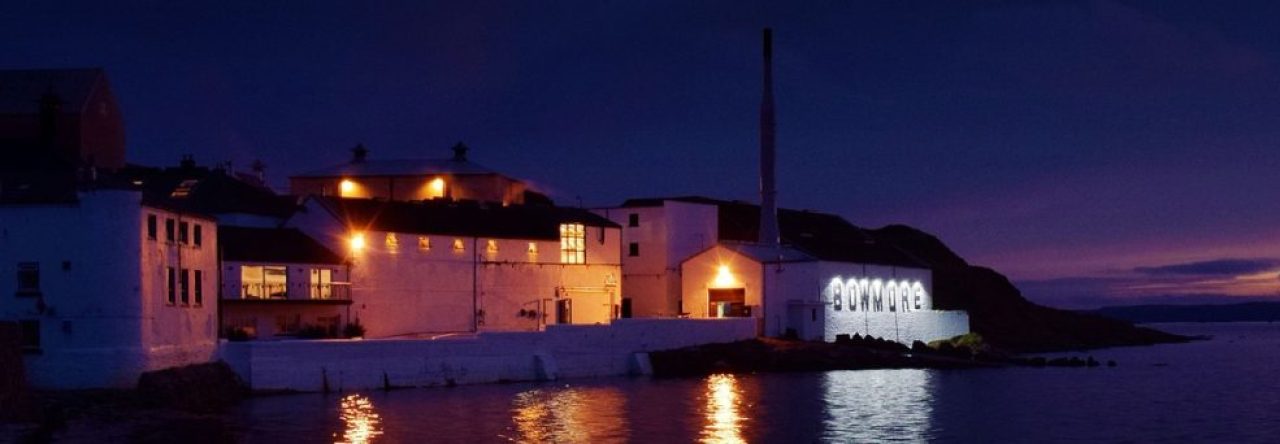
Bowmore
A distillery that seems to have fallen off almost everyone’s radar lately, but Bowmore was vying with Macallan as the ultimate collector’s brand within recent memory. From an enthusiast perspective, almost every move Bowmore has made in recent years has been a step in the wrong direction, including price hikes, a pointless brand association with Aston-Martin, progressively worsening packaging choices (the most recent rebrand is an outright abomination), and a steadfast refusal to adapt to contemporary mores around the presentation of the actual liquid. All the Bowmore I’ve ever tasted has been anywhere from decent to very nice, and I suspect the distillery is capable of some whisky wonders, but right now, they seem more inclined to chase the aspirational market, although I have no clear sense that they’re succeeding to the extent that Macallan, or even Dalmore, have.
The professional whisky writer’s beloved
Professional whisky writers tend to be a lot like you and me and the enthusiast community at large except when it comes to…
Glen Grant
Glen Grant is a middling-famous Speyside distillery, especially well-known and well-loved in Italy. Official bottlings are reasonably easy to come by, and tend to be reasonably-priced, light, bourbon-matured whiskies with nary a care for integrity presentation. You’re unlikely to hear much about it from the folks over at Dramface or similar concerns, but peruse Jim Murray’s Whisky Bible, and you will find the distillery buried under a thick layer of panegyric. At least some of this is directed at very ancient bottlings from Gordon & MacPhail (not the sort of stuff the budget conscious–in my view, overly so–folks at Dramface will deal with), but there is also no small praise for the more workaday expressions. I’ve had the more ordinary expressions a few times over the years, and I thought they were fine, but mostly pretty anodyne.
And finally…the canonical Glens–fiddich, livet, and morangie
Glenfiddich
Anyone who enjoys single malt owes William Grant and Sons their thanks; that firm, which owns Glenfiddich to this day, was the first to aggressively mass-market single malt Scotch with this whisky. I actually like almost all the Glenfiddich whisky I’ve ever had (which is quite a bit), but it’s never been a huge favorite. I suspect that the core whisky is extremely high quality, and that if they reserved at least a little bit to bottle in a way that would appeal to enthusiasts, they could really knock some socks off. But I don’t see much incentive for them to change things up–they seem to be doing quite well as a mass market malt.
Glenlivet
Earlier in my whisky journey, Glenlivet actually was a genuine favorite of mine. Last time I had some of the core 12 year old make, I thought it was solid, if more than a little thin. Like Glenfiddich, a solidly made whisky that isn’t even trying to appeal to most serious whisky drinkers, although at least in Glenlivet’s case, there are occasional expressions with a bit more oomph, and indie bottlings aren’t completely unheard of.
Glenmorangie
The last time I sampled the core 10 year old expression, I thought it was probably the best of the entry level “Glens” (i.e. in comparison with Glenfiddich 12 and Glenlivet 12). I can’t speak for the more recent iterations, but although it really isn’t, and never has been, a favorite of mine, I’d lean toward giving Glenmorangie the crown among these relatively entry-level whiskies, at least at the lower end of the range.
 Whisky Considered